Products
Coco Peat
Coco Peat is the fine pith from the coconut husk. It is pressed into blocks and expands when water is added.
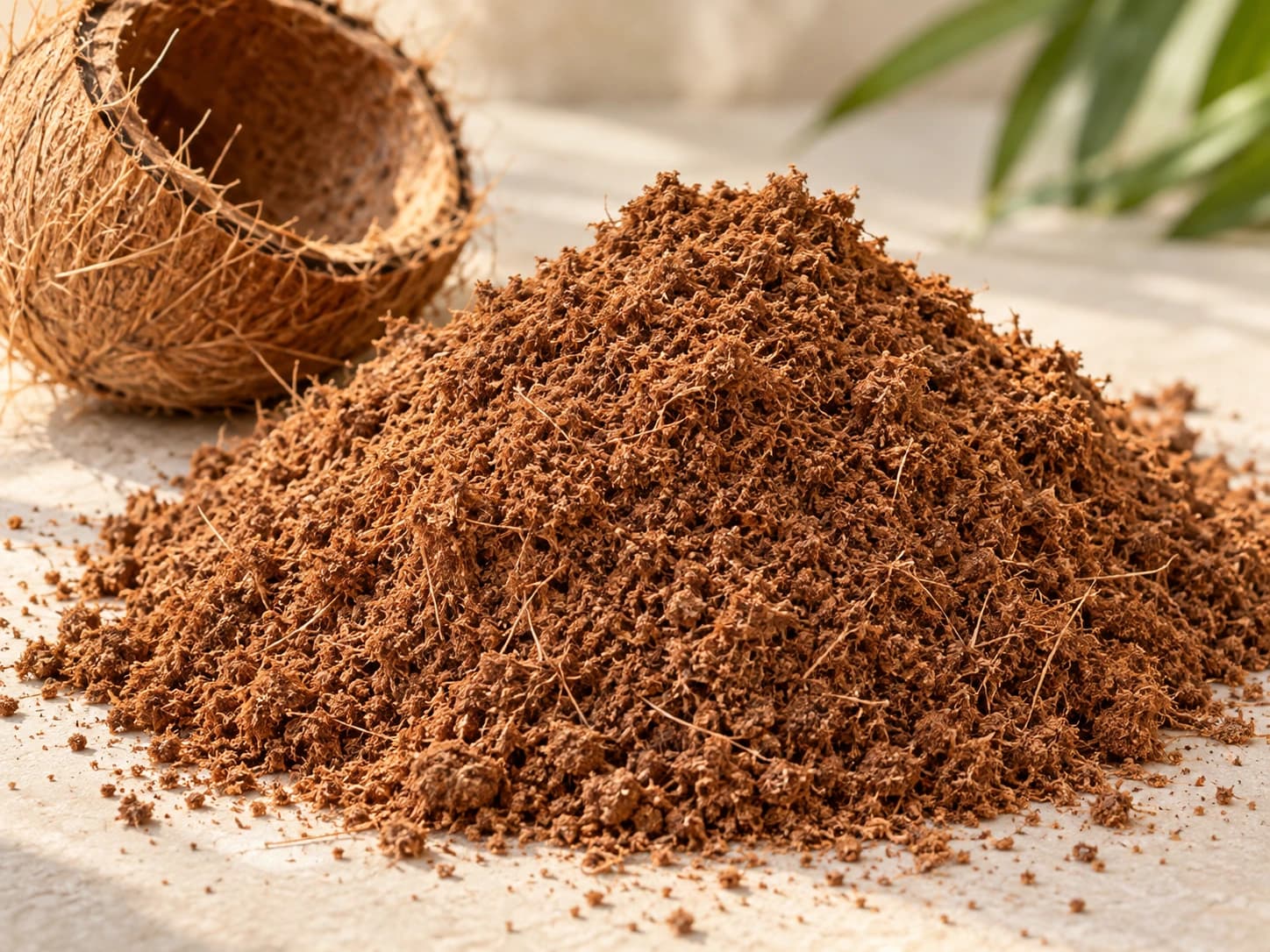
Natural Cocopeat 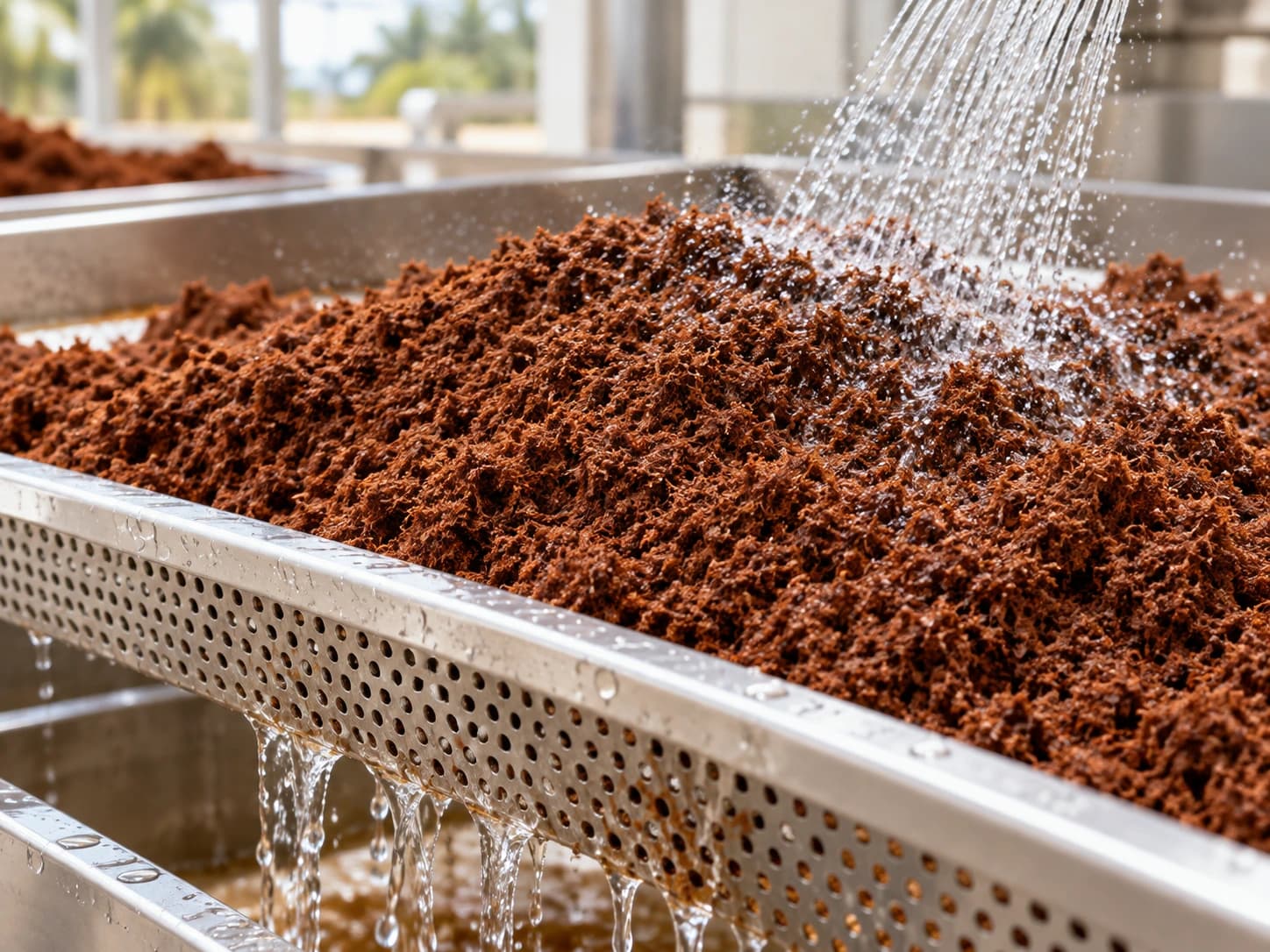
Washed Low EC Cocopeat 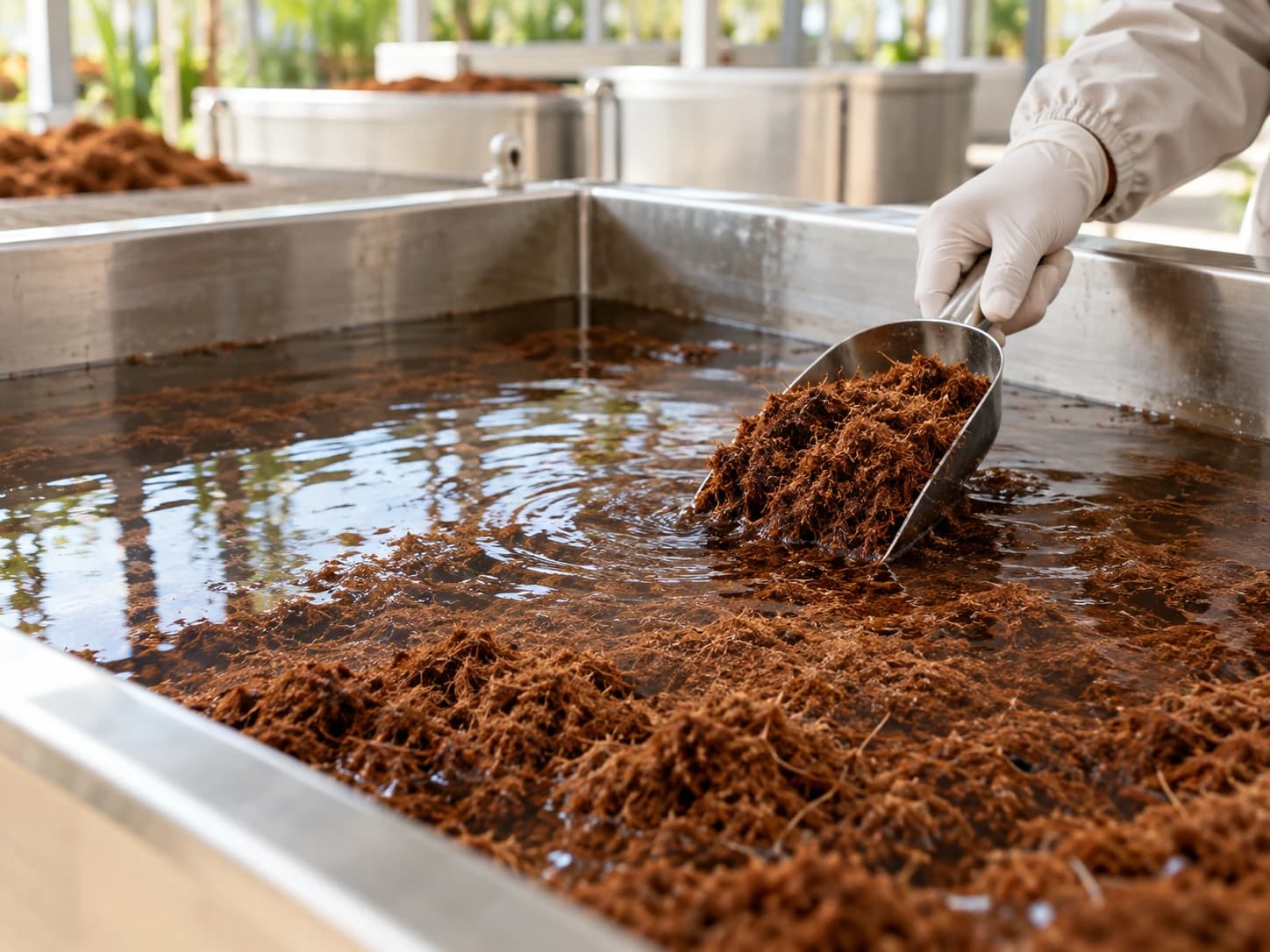
Buffered Cocopeat 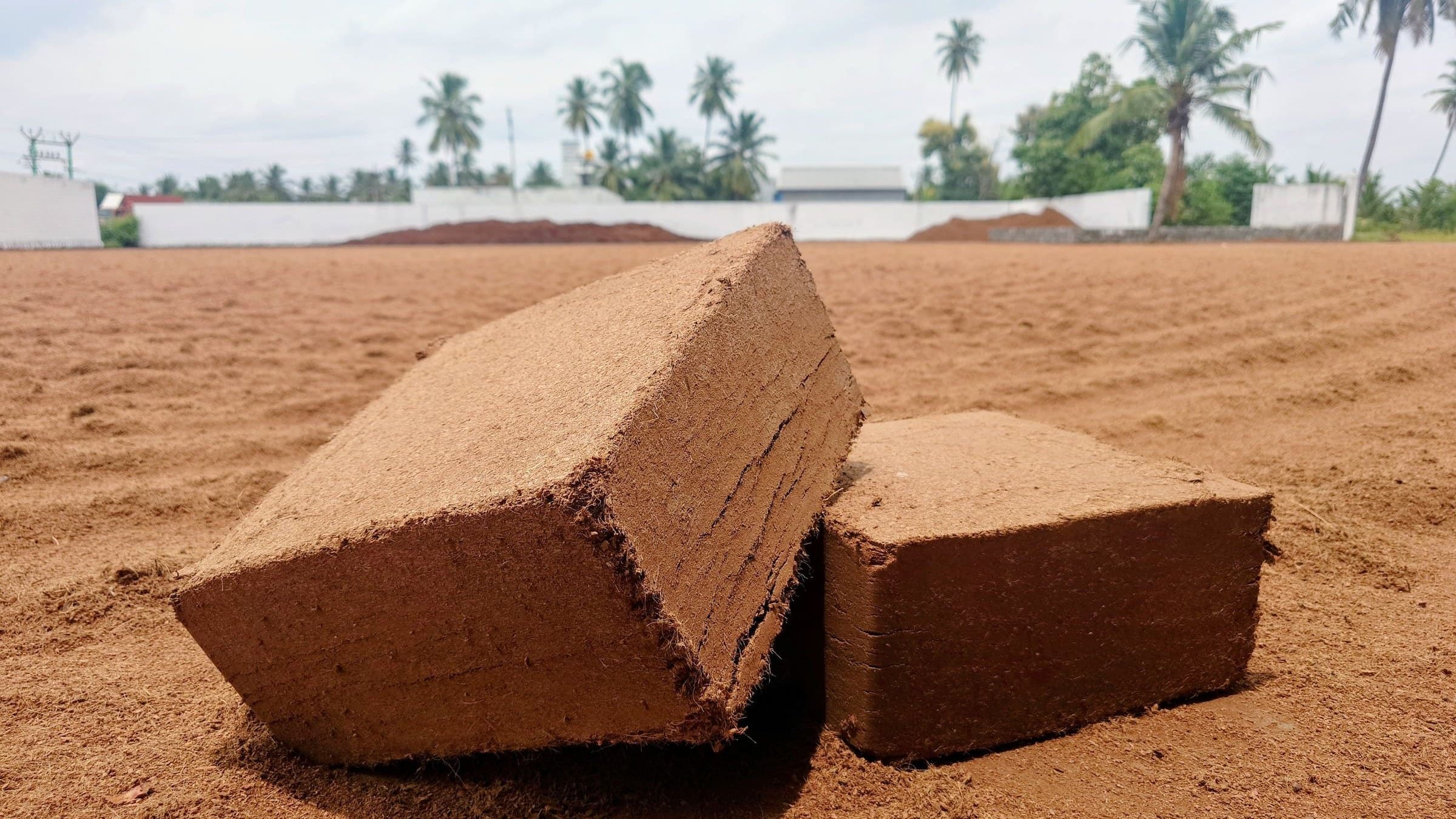
Compressed Coco Peat Blocks
What it is
The pith is the fine brown part of the husk. It is dried and pressed into blocks. The blocks on the drying yard are this form. Natural Cocopeat and Washed Low EC Cocopeat are supplied this way. The blocks look the same. The treatment is what differs.
Natural Cocopeat
Natural Cocopeat is the pith in its natural state, pressed into a block. It is not washed to lower the conductivity.
It is used where the crop and the system can work with the natural salt level of the material, including in substrate blends. Whether it fits a specific crop is confirmed with the specification.
Washed Low EC Cocopeat
The pith is washed. Washing lowers the electrical conductivity, the EC value.
It is used where the crop or the system needs a lower conductivity, including young-plant production and crops that are sensitive to salts. Whether it fits a specific crop is confirmed with the specification.
Buffered Cocopeat
The pith is buffered. Sodium and potassium held in the material are exchanged for calcium, so the nutrient release is more stable when the crop starts.
It is used where the crop needs that balanced cation status, not only a lower conductivity.
The difference
Natural Cocopeat and Washed Low EC Cocopeat are the same blocks on the drying yard. Natural keeps the natural conductivity of the pith. Low EC is washed so the conductivity sits lower, for crops and systems that need that. Buffered is the same block form, with an added calcium buffer so the nutrient release is more stable when the crop starts.
Expansion: How much does a 5 kg block yield?
Expansion is the swelling of compressed coco peat when water is added. A typical commercial 5 kg block yields approximately 60–75 litres of loosened, moist growing medium. Five of these blocks, weighing 25 kg in total, yield approximately 300–375 litres.
The litre figure describes the final substrate volume, not the amount of water required. Add water gradually, allow full hydration and loosen the material. Actual yield depends on factors including raw material, moisture and processing. The applicable product specification confirms the agreed volume yield.
pH: How acidic is coco peat?
pH describes how acidic or alkaline a growing medium is: below 7 is acidic, 7 is neutral and above 7 is alkaline. Coco peat commonly falls around pH 5.5–6.8, making it slightly acidic. This is a typical guide range, not a guaranteed batch specification.
pH affects nutrient availability to plants. The appropriate target depends on the crop, irrigation water and fertiliser programme. Check pH in the final growing medium or growing system.
EC: What does Low EC mean?
EC stands for electrical conductivity. Measured in mS/cm, it indirectly indicates the amount of dissolved salts in a water extract of the growing medium. These include nutrient salts and other salts. EC alone does not identify which salts are present.
Excess salts can damage roots, with sensitive young plants particularly vulnerable. Washing reduces soluble salts in Washed Low EC Cocopeat. Low EC does not mean salt-free or fully fertilised.
EC results are only comparable when the same test method is used. A value therefore needs both a unit and an extraction method, such as 1:5 by volume. Different extraction ratios can produce substantially different results. The appropriate limit is agreed in the product specification alongside the crop, application and test method.
Washing and buffering serve different purposes: washing reduces soluble salts, while buffering also treats exchange sites in the material with calcium. A low EC reading alone does not confirm that coco peat has been buffered.